
Lowndes County Arrest Records and Court Charges
Arrest records usually come from the law-enforcement and jail side of the process. They may identify the person arrested, booking date, arresting agency, charges alleged at intake, bond amount, jail status, and related warrant or case number if shown. The Lowndes County Sheriff's Office is led by Sheriff Ashley Paulk, and the sheriff/jail address is 120 Prison Farm Road, Valdosta. The sheriff site links Current Inmates to the county PublicAccess jail module.
Court charge records begin when the allegation is placed before a court. In Lowndes County, Magistrate Court may issue arrest warrants after probable cause, conduct first appearances, set or review bond, and hold preliminary hearings. The District Attorney prosecutes felony Superior Court cases, while the Solicitor General prosecutes State Court misdemeanor and traffic matters. Full outcomes, pleas, dispositions, and sentences belong with the criminal court records case file.
This page does not treat a booking entry as proof of guilt. Arrest records can show what was alleged at intake, but court charges can be amended, reduced, dismissed, or replaced once prosecutors review the file. For that reason, the best charge search reads the jail record, the court docket, and the final disposition together.
The county Sheriff's Office page lists sheriff, jail, records, citation, bond, and public-safety links.
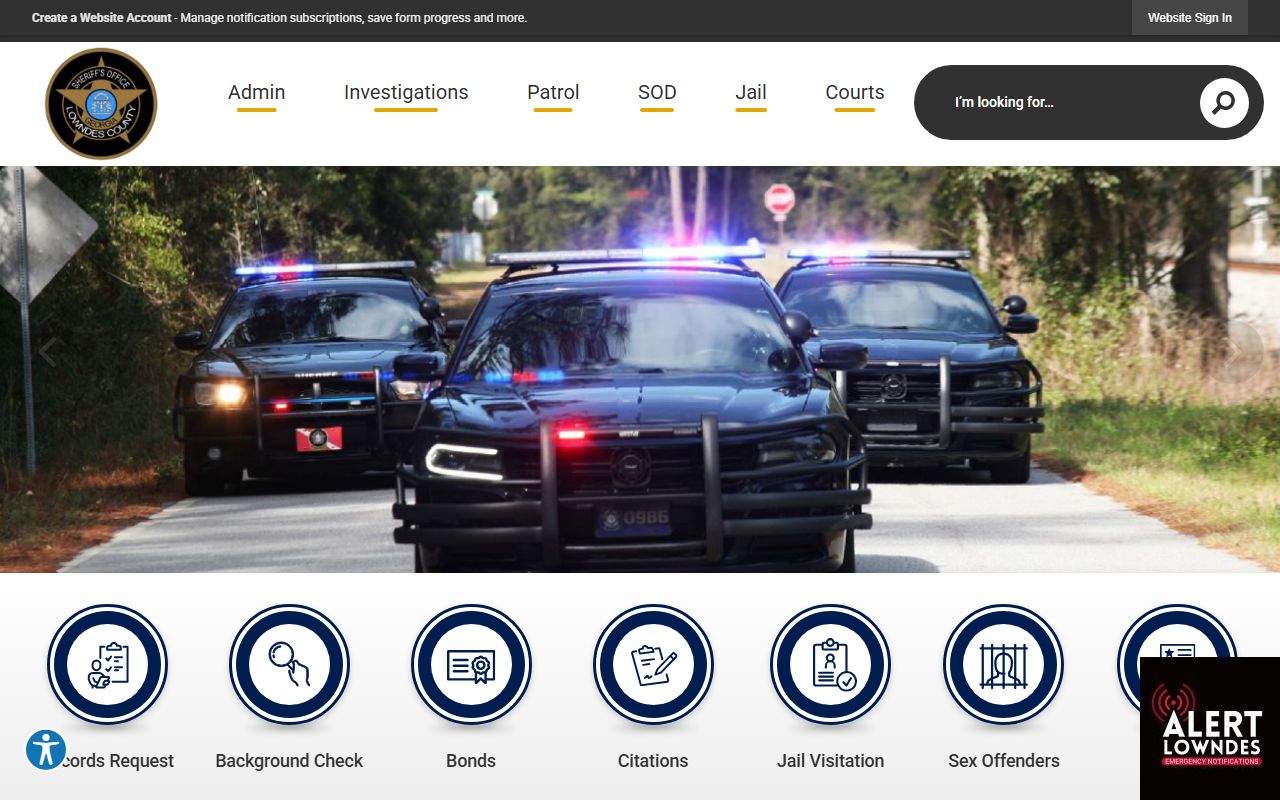
Use sheriff and jail channels for arrest, custody, bond, and law-enforcement records, then use court channels for filed charges and case outcomes.
How to Find Lowndes County Arrest Records and Charges
Start with the record type. For a current custody or bond question, use the Lowndes PublicAccess jail records module or call the jail at 229-671-3000. For formal court charges, use the Lowndes County Odyssey Portal, then contact the Clerk of Superior Court / Clerk of Court if a document or certified disposition is needed.
- Check the jail or PublicAccess route first if the question is whether someone is currently booked or has a jail bond record.
- Use Odyssey Smart Search for the court case after charges are filed, searching by defendant name or case number.
- Open the case and read the charge list, count numbers, charge status, docket events, and next court dates.
- Confirm whether the matter is Superior Court felony, State Court misdemeanor, Magistrate preliminary or warrant-related, or Valdosta Municipal Court.
- Request sheriff-held records through the sheriff records form when incident, arrest, or law-enforcement material is needed.
For statewide criminal-history information and record restriction, use the Georgia Bureau of Investigation resources. A GBI criminal-history record is not the same as the Lowndes court case file, and it may not show every local docket document, bond order, or filed motion.
The Lowndes County Public Defender page identifies the defense office for eligible Superior and Juvenile Court representation.
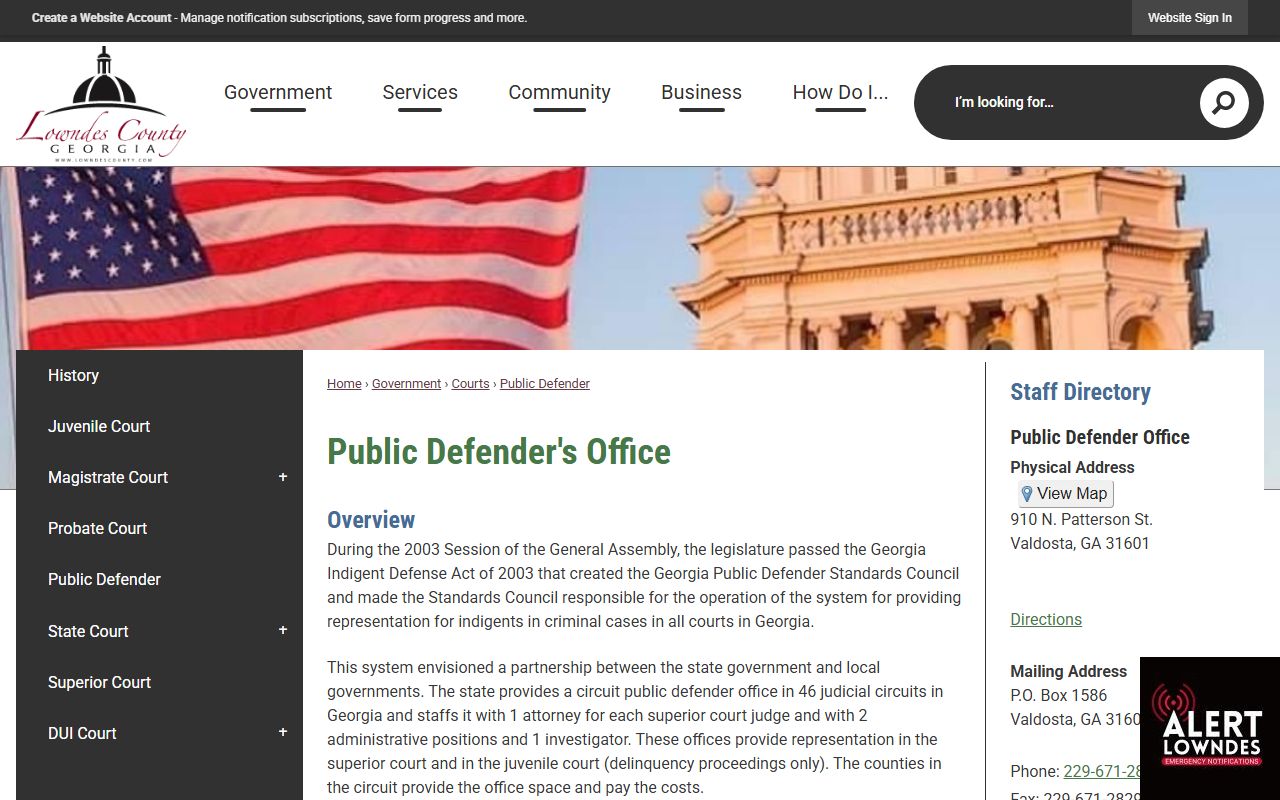
The Public Defender is not a public-records custodian, but its role matters because charges after arrest often require defense counsel before disposition or sentencing.
How Charges Get Filed After an Arrest: Accusation and Indictment
Georgia criminal charging terms differ from generic labels used in other states. A felony may proceed by indictment, which is a grand jury charging document. Some prosecutions use an accusation, which is a formal charging document filed by the prosecutor. A citation or warrant can start the process, but the filed court charge controls the court case record.
| Citation or Warrant | Accusation | Indictment | |
|---|---|---|---|
| Filed By | Officer or judicial officer process | Prosecutor | Grand jury |
| Common For | Traffic, warrant, first-appearance, or initial arrest path | Misdemeanors and some criminal filings | Felony prosecutions |
| Record Use | Shows arrest, court date, or warrant basis | States formal charge counts | States felony counts returned by grand jury |
Charge Status and What It Means
Charges can change after arrest. A prosecutor may file fewer counts than the booking record listed, add counts, amend a statute, reduce a felony to a misdemeanor, dismiss a count, or enter nolle prosequi. The court docket and final disposition should be reviewed charge by charge rather than assuming every arrest allegation ended in a conviction.
| Status | What It Means |
|---|---|
| Pending | The charge remains open and has not reached final disposition. |
| Amended / Reduced | The charge was changed, often to a different count, statute, or severity level. |
| Dismissed | The court record shows the charge did not proceed to conviction under that count. |
| Nolle Prosequi | The prosecutor declined to continue that charge, subject to the legal effect shown in the case record. |
| Disposed | The charge has a final outcome, which may be conviction, dismissal, acquittal, plea, or other resolution. |
The sheriff contact form includes a Warrants division option and other division routing fields.
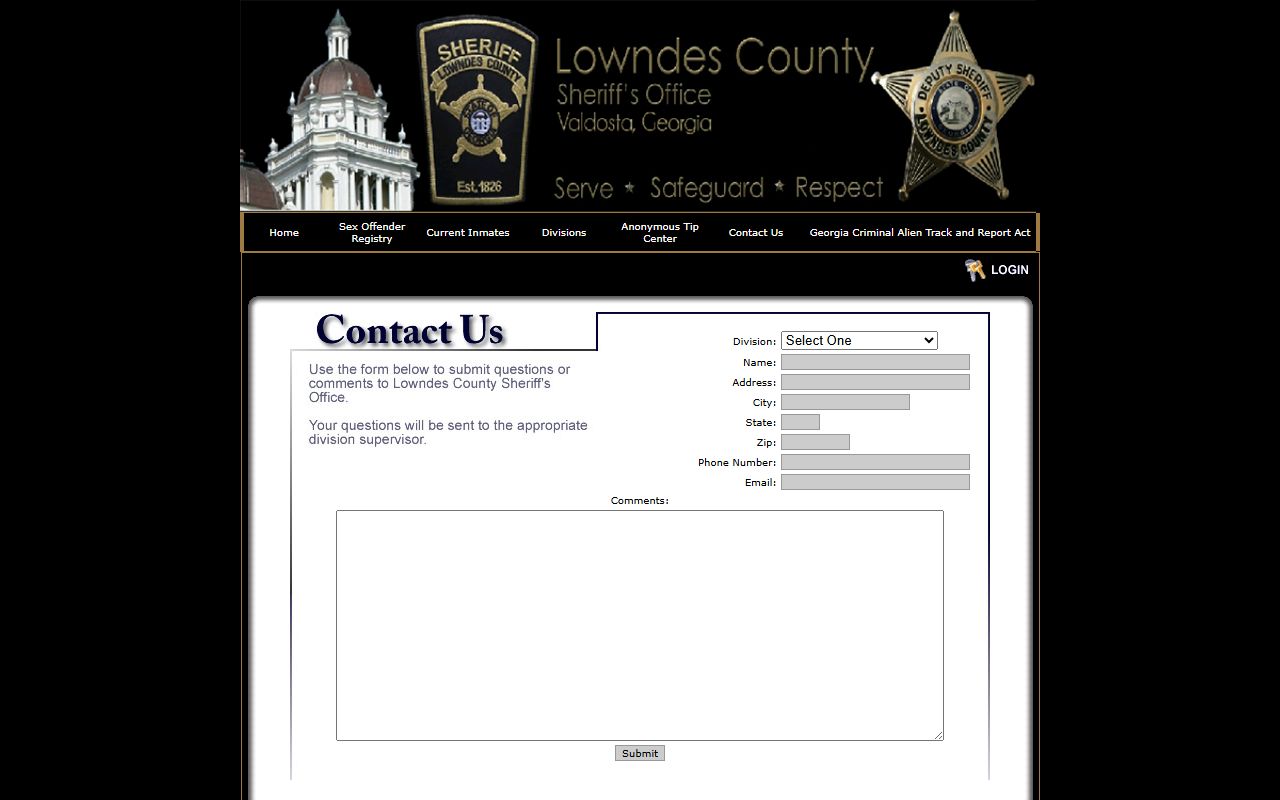
That form is useful for routing nonemergency records questions, but urgent warrant, court-date, or bond issues should be handled by calling the appropriate court, sheriff, or jail office.
Charges vs. Convictions
Being arrested or charged is not the same as being convicted. A booking record may list allegations at intake. A court charge record may show formal counts. A conviction appears only after the court enters a guilty plea, guilty verdict, or other conviction-level disposition. Some charges are dismissed, reduced, amended, transferred, restricted, or resolved under a program such as Georgia First Offender treatment.
| Charge | Conviction | |
|---|---|---|
| Stage | Allegation filed in court or listed after arrest | Final adjudication through plea, verdict, or qualifying disposition |
| Proof Point | Probable cause or prosecutorial filing decision | Guilt established under the criminal process |
| Public Record | Often public unless restricted, sealed, juvenile, or confidential | Often public unless restricted, sealed, First Offender, juvenile, or confidential |
Sealed vs. Restricted Records
Georgia record terminology should be handled carefully. The GBI uses record restriction for qualifying criminal-history information. A court-sealed record is hidden from ordinary public access by law or court order. Neither label should be treated as a promise that all local arrest, jail, agency, court, and criminal-history references disappear from every system at the same time.
| Sealed | Restricted | |
|---|---|---|
| Visibility | Hidden from public court access by law or court order | Limited in criminal-history access for qualifying records |
| Law Enforcement | Access may remain for authorized users | Criminal-justice access may remain |
| Georgia Route | Court sealing process or confidentiality statute | O.C.G.A. Section 35-3-37, depending on arrest date and disposition |
Charge Codes and Severity Levels
Charge records may list offense names, Georgia statute references, count numbers, severity, arresting agency, bond, and early court dates. Superior Court felony charges are prosecuted by the District Attorney. State Court misdemeanor and traffic charges are prosecuted by the Solicitor General. Municipal charges may remain in Valdosta Municipal Court when they involve city ordinance, local code, environmental, nuisance, business, housing, traffic, or certain state-law violations.
One arrest can produce several charges. Each count should be read separately because one count may be pending, another dismissed, another reduced, and another resolved by plea or sentence. The court docket is the best record for the formal status of each filed count, while the jail or sheriff record is the better path for booking, bond, and custody status.
Statewide Charge and Criminal History Lookups
The Georgia Bureau of Investigation criminal-history FAQ explains statewide criminal-history access and limitations. The GBI record-restriction page explains the O.C.G.A. Section 35-3-37 restriction process. For arrests after July 1, 2013, the person generally contacts the prosecutor. For arrests before July 1, 2013, the older form route begins with the arresting agency.
In Lowndes County, a felony restriction question may involve the District Attorney, while a misdemeanor or State Court traffic-related charge may involve the Solicitor General. Sheriff records staff can help with sheriff-held records, but open-records staff cannot be assumed to grant record restriction or alter court dockets without the required prosecutor or court process.
The U.S. Attorney Valdosta Division page identifies the federal prosecution office for the Middle District of Georgia's Valdosta area.
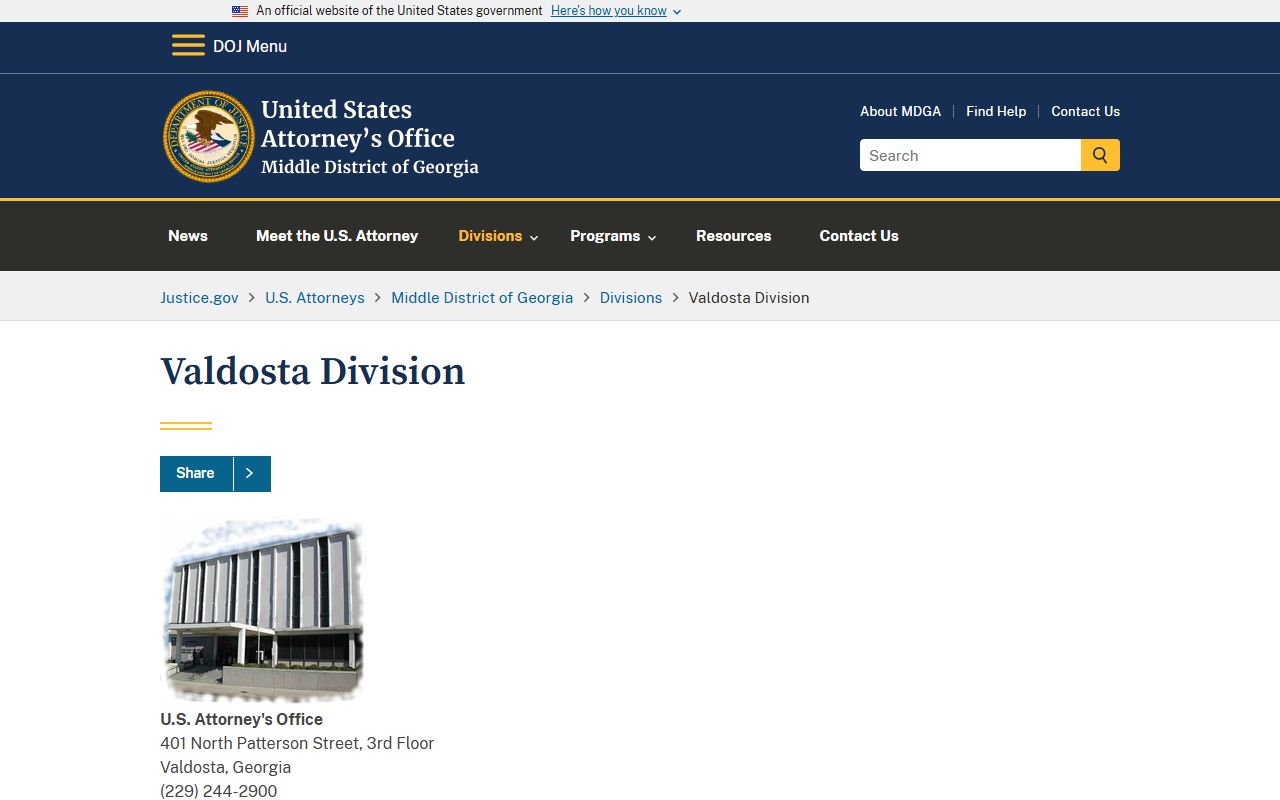
Federal charges are not filed in Lowndes County Superior, State, or Magistrate Court, so PACER and federal court contacts replace county portals for federal prosecutions.
Background Check Considerations
Arrest records and court charge records require careful use. A charge can be pending, dismissed, reduced, or resolved without conviction. A jail booking record can be current for custody but incomplete for final court outcome. FCRA-regulated users need proper consumer-reporting procedures instead of relying on casual lookups or isolated docket entries.
Important: Verify charge status and disposition with the court before relying on an arrest or charge record.
Restricted Charge Records in Lowndes County
Restricted charge records may include juvenile matters, sealed warrants, active investigations, dismissed or nonconviction charges eligible for restriction, First Offender matters, and records involving protected identifiers. Law-enforcement-sensitive material may be withheld from sheriff open-records responses. Juvenile Court records are not public like ordinary adult criminal dockets.
Use the sheriff open-records route for sheriff-held arrest, incident, and law-enforcement records. The sheriff form can be submitted by email to sorecords@lowndescounty.com, faxed to 229-333-5141, or mailed to 120 Prison Farm Road, Valdosta, GA 31601. For court-filed charges and dispositions, contact the Clerk of Superior Court / Clerk of Court at 229-333-5127, State Court at 229-671-3310, Magistrate Court at 229-671-2610, or Valdosta Municipal Court at 229-293-3171 depending on the issuing court.
If the charge came from a city stop or municipal citation, Valdosta records may be involved before or instead of county State Court. If the charge is federal, the U.S. District Court for the Middle District of Georgia and PACER are the official record channels. Lowndes County portals should not be used as the final source for federal charges.